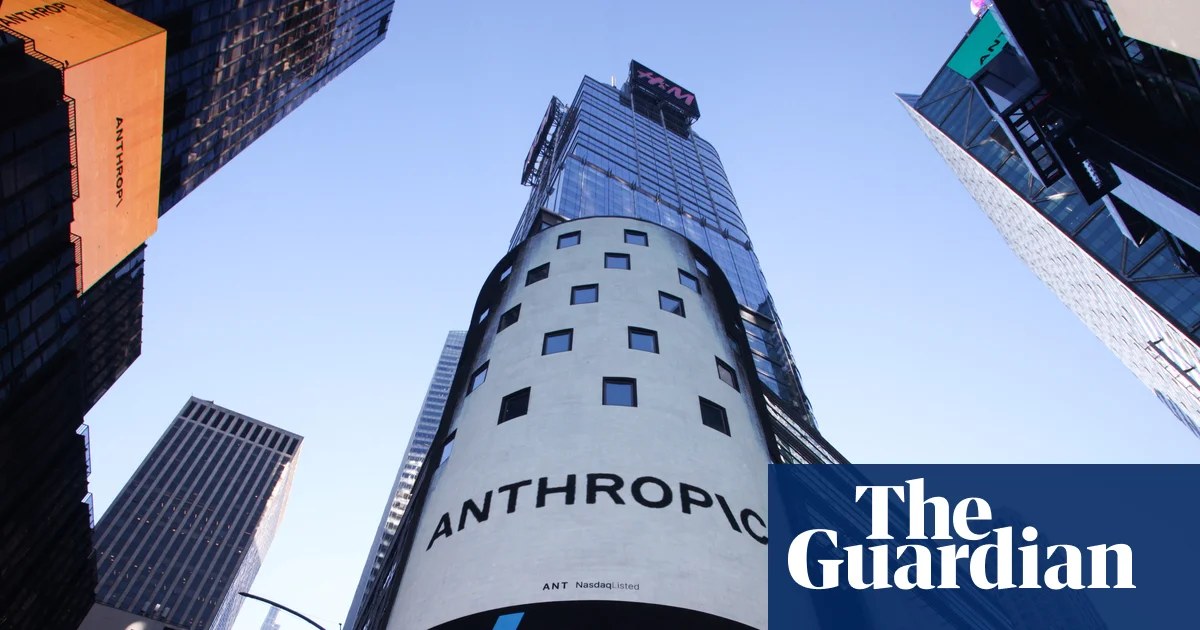
Anthropic shares tumbled 9% to $88.30 on their second trading day, surrendering most of Thursday's 17% debut surge, as the Nasdaq Composite erased all 2026 gains and shed roughly $4 trillion in market value this week. The AI-driven rout spread across global markets, pushing the S&P 500 and Dow Jones into correction territory and triggering the worst week for Asian equities since 2020.
Key Takeaways
- Anthropic shares fell 9% to $88.30 on day two, near the $83 IPO price, after a 17% first-day gain
- Nasdaq Composite erased all 2026 gains, down 5% from Jan 1, losing ~$4 trillion in market value this week
- S&P 500 and Dow Jones entered correction territory; global markets saw worst week since 2020
- Nvidia -14%, TSMC -6%, SoftBank -14.5%; semiconductor sector led the broad-based liquidation
- Analysts cite liquidity drain from IPO and fundamental shift from AI optimism to valuation scrutiny
Executive Intelligence Brief
Anthropic's Volatile Debut and Liquidity Drain
The frontier AI company behind the Claude chatbot priced its record-breaking initial public offering at $83 on Thursday, briefly surging nearly 40% before closing up 17%. Friday's 9% decline brought shares to an $85 handle, nearing the offer price and wiping out the post-IPO premium. Neil Wilson, UK investor strategist at Saxo, described "just relentless selling in tech" as "post-IPO euphoria gives way to the reality of a steep sell-off across the tech and AI space that shows no sign of easing just yet."
Chris Beauchamp, chief market analyst at IG, warned that Anthropic's flotation may be "draining market liquidity" as investors liquidate positions in other technology names to fund allocations to the new issue. "The slide from yesterday's highs sends a message that there might be more at work here than investors realise, and while brokers are scrambling to buy more, that liquidity has to come from somewhere, and the other tech names may be the first ones to feel the pressure," Beauchamp said.
Semiconductor Sector Bears the Brunt
The sell-off concentrated heavily in semiconductor stocks, the primary infrastructure beneficiaries of AI capital expenditure. Nvidia fell 14%, erasing hundreds of billions in market capitalization. Memory chipmakers SanDisk and Micron dropped 14% and 12% respectively. In Taiwan, the benchmark index plunged 6.7% to its lowest level since mid-April, with Taiwan Semiconductor Manufacturing Co. down approximately 6%. The decline prompted the chair of Taiwan's stock exchange to pledge measures ensuring stable market operations and reassure investors about Taiwanese corporate fundamentals.
Global Contagion and Correction Territory
The rout extended well beyond U.S. shores. Japan's Nikkei 225 fell 5%, while South Korea's tech-heavy Kospi index lost 5.5%. SoftBank Group, a major AI investor through its Vision Fund, suffered its worst session in over two years, declining 14.5% in Tokyo. European equities posted their largest weekly decline since March 2025, with the Stoxx 600 dropping 1.9% on Friday and London's FTSE 100 hitting a five-month low. Wall Street's main indices all fell more than 2% on Thursday, the day of Anthropic's debut.
Valuation Concerns Supplant AI Optimism
Daniela Hathorn, senior market analyst at Capital.com, noted that "the IPO demonstrated that demand for AI exposure remains strong, but it has not been enough to overcome concerns about elevated valuations, profitability and the sustainability of investment spending." The market mood has shifted from "buying the dip" toward questioning whether the correction has further to run, with weakness in equal-weighted indices suggesting selling pressure is broadening beyond mega-cap concentration.
Forward Outlook: Earnings, Rates, and Lock-Ups
Market focus now turns to upcoming semiconductor earnings for evidence of sustained AI infrastructure demand. Federal Reserve policy signals on interest rates will critically affect the discount rate applied to long-duration AI cash flows. Anthropic's seven co-founders, reportedly worth a combined $180 billion on paper, face standard lock-up restrictions typically expiring 90-180 days post-IPO, which could introduce additional supply overhang. The trajectory of equal-weighted versus market-cap-weighted indices will signal whether the sell-off remains concentrated or has become systemic.