Cambridge Associates CEO David Druley warned that extreme concentration in U.S. equity markets — where roughly 10 stocks account for 35-40% of index weight — makes diversification critical, while a structural shift toward self-sufficiency and U.S. restrictions on China venture capital create openings for Middle Eastern investors.
Key Takeaways
- U.S. equity concentration at historic extremes: ~10 stocks represent 35-40% of index weight, undermining passive diversification.
- Structural shift from efficiency to self-sufficiency driving global capital reallocation across geopolitical fault lines.
- U.S. restrictions on China venture capital create strategic opening for Middle Eastern and European investors in early-stage technology.
- Family offices constitute 40% of Cambridge Associates' business, providing patient capital base for Gulf AI infrastructure build-out.
- Druley views U.S. AI/data center pause as temporary; Gulf positioned to capture redirected capital flows during transition.
Executive Intelligence Brief
Concentration Risk Reshapes Portfolio Construction
In a November 12 interview on Bloomberg's Horizons Middle East and Africa, Druley identified a fundamental shift in global investment strategy: a move from decades of efficiency-driven globalization toward self-sufficiency and resilience. This transition, he argued, is the primary lens through which allocators should view current market structure.
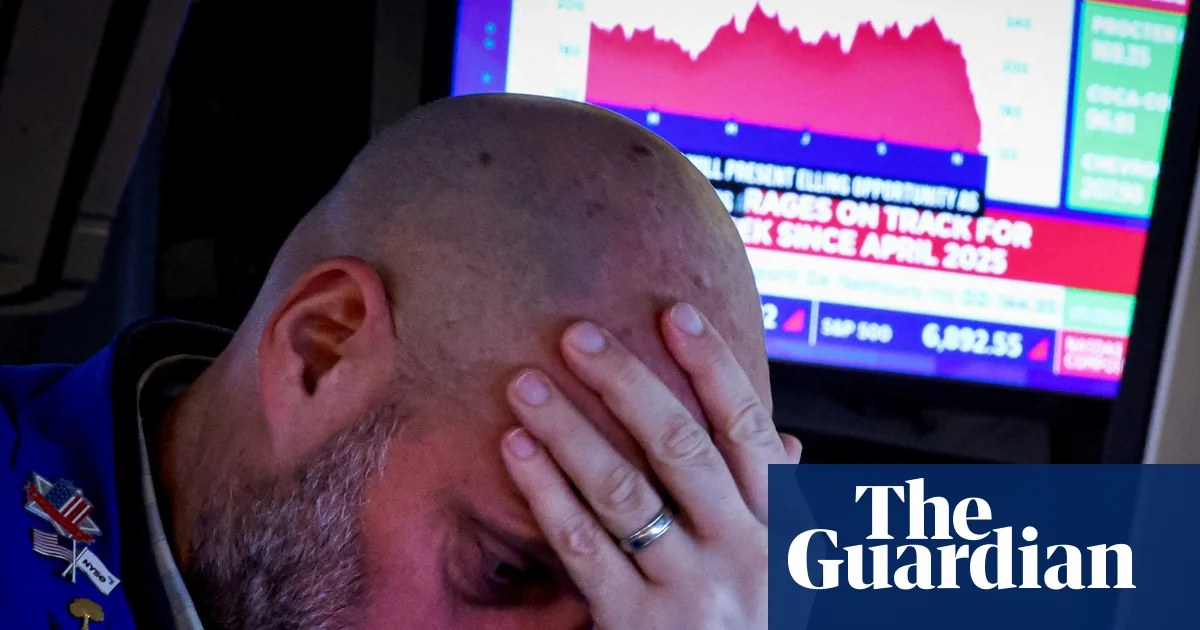
The most immediate manifestation is equity concentration. Druley noted that approximately 10 stocks now comprise 35-40% of U.S. benchmark indices, with similar concentration patterns evident in global and emerging market gauges. This level of index dominance by a handful of mega-cap technology names effectively negates the diversification benefits of passive broad-market exposure, forcing institutional investors toward active management and alternative asset classes to achieve genuine portfolio breadth.
Geopolitical Constraints Redirect Venture Capital Flows
Druley highlighted U.S. geopolitical constraints on investment in Chinese venture capital as a structural re-routing of global innovation capital. With American capital restricted from funding Chinese early-stage technology companies, a vacuum has emerged that Middle Eastern and European investors are positioned to fill.
This dynamic intersects directly with the AI infrastructure build-out. While Druley expects only a temporary pause in U.S. data center expansion — viewing any slowdown as cyclical rather than structural — he identified the UAE and Saudi Arabia as prime beneficiaries of redirected capital. Both nations have articulated sovereign strategies to become global AI hubs, backed by substantial sovereign wealth fund resources and expanding domestic energy capacity.
Family Offices Drive Regional Sophistication
The growing sophistication of Middle Eastern asset managers is anchored by large family offices, which Druley revealed account for 40% of Cambridge Associates' business. These entities are evolving from passive wealth preservation vehicles into active institutional allocators with direct co-investment capabilities, dedicated investment teams, and multi-generational horizons that align with infrastructure and venture timelines.
This institutionalization of family office capital provides a stable, patient funding base for the region's AI and data center ambitions, distinct from hot-money flows that exacerbate boom-bust cycles in emerging technology sectors.
Forward Outlook: Monitoring the Reallocation
The critical variables for the coming quarters are the duration of the U.S. AI capex pause, the pace of Gulf sovereign deployment into digital infrastructure, and the evolution of U.S. outbound investment restrictions. Druley's framework suggests that investors positioned at the intersection of geopolitical realignment and technology infrastructure — particularly those with access to Middle Eastern deal flow — hold a structural advantage in the current regime.