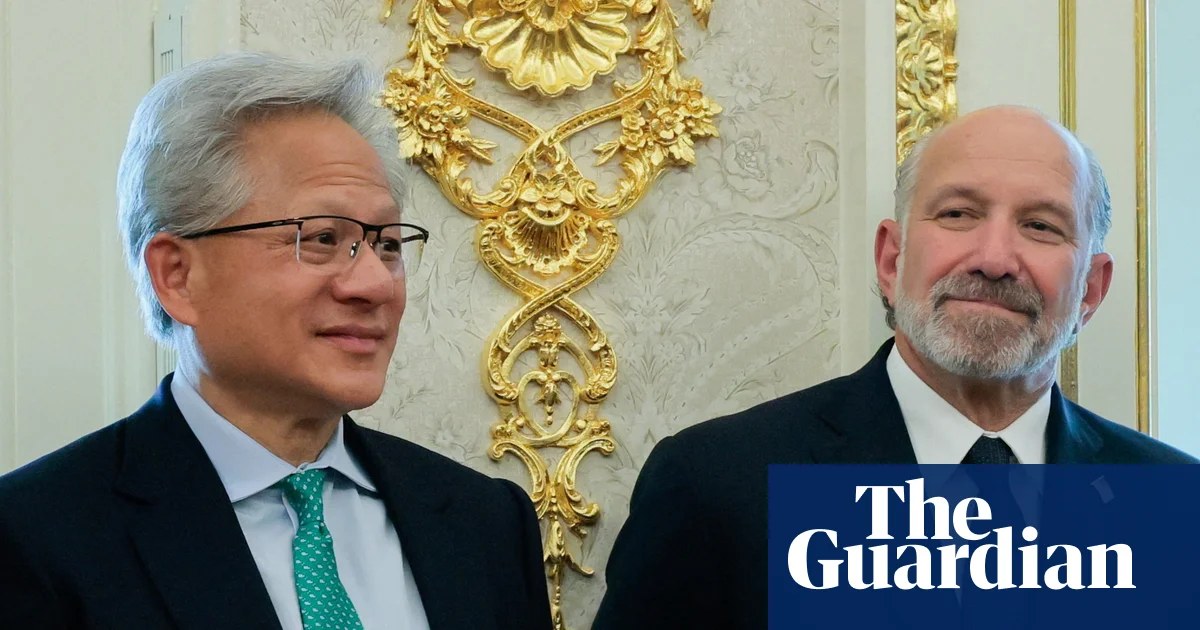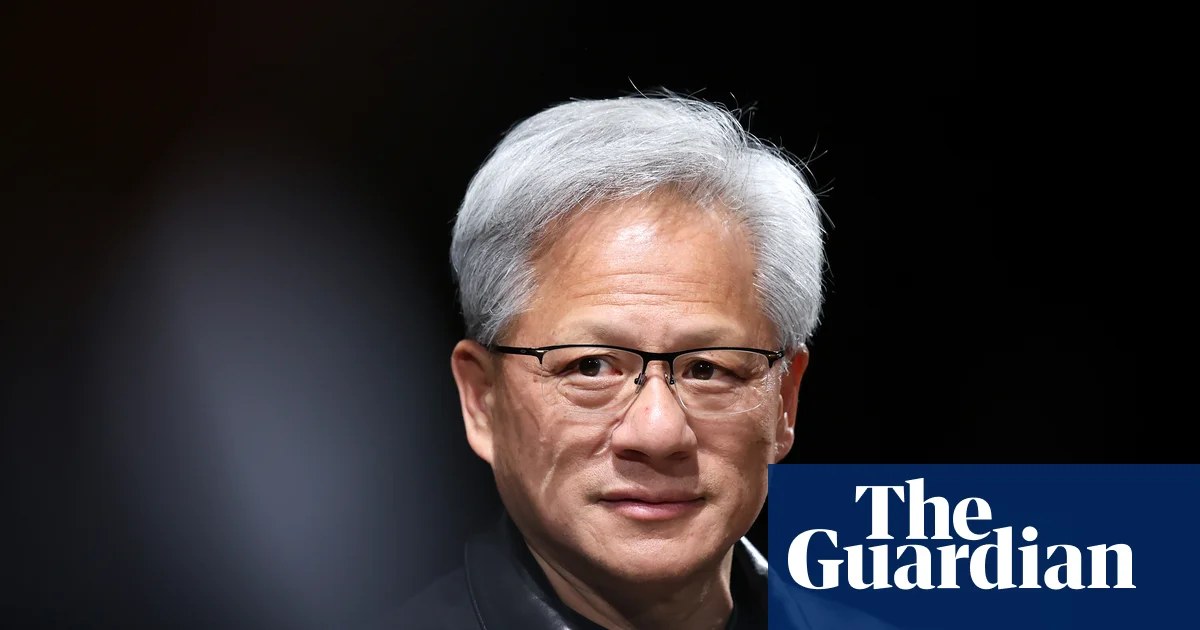
Nvidia shares plunged 13% in early trading after the resignation of Jensen Huang, the co-founder who spent three decades building the company into the indispensable infrastructure provider for the generative AI boom. Huang's departure, prompted by an internal investigation into a personal relationship, has immediately redirected scrutiny from the company's technological moat to its financial architecture — a 'central bank of AI' built on circular financing, opaque sovereign agreements, and a singular dependency on TSMC's constrained manufacturing capacity.
Key Takeaways
- Nvidia shares fell 13% after CEO Jensen Huang resigned over an affair investigation.
- Huang personally orchestrated opaque sovereign AI chip deals (e.g., 260,000 chips to South Korea) and a circular financing model funding neoclouds and AI startups.
- Nvidia's irreplaceable asset is preferential access to TSMC capacity, where advanced chips have only a 60% yield rate.
- Competitors (Microsoft, Meta, Google) are advancing in-house chips; Huang's exit accelerates their migration away from Nvidia.
- Key monitors: board succession, disclosure of sovereign/neocloud terms, neocloud sector solvency, TSMC 2027 allocation negotiations.
Executive Intelligence Brief
The Architecture of Nvidia's 'Central Bank of AI'
Nvidia's dominance rests not merely on its GPU designs — which rivals like Google's Tensor Processing Units increasingly match — but on a web of financial relationships orchestrated by Huang. The company has financed a constellation of 'neocloud' operators, providing capital for them to purchase Nvidia chips and build datacenters, effectively moving inventory and datacenter risk off Nvidia's balance sheet while booking revenue.
Simultaneously, Nvidia has deployed hundreds of billions of dollars into AI startups and strategic partners such as OpenAI, often structured as credits or cash earmarked for chip purchases. This circular flow — Nvidia capital buying Nvidia product — has propped up demand signals and valuation multiples across the AI ecosystem. The resignation raises immediate questions about whether the board will honor, unwind, or restructure these commitments.
Sovereign AI Deals: Opacity at State Scale
In 2025, Huang personally negotiated 'sovereign AI' agreements with governments including Saudi Arabia, the UK, France, and South Korea. The South Korean deal alone involved a commitment for 260,000 advanced chips, yet the delivery timeline, pricing terms, and payment structures were never publicly disclosed. These agreements functioned as de facto sovereign guarantees, underwritten by Huang's personal relationships with leaders such as Mohammed bin Salman, Keir Starmer, and Emmanuel Macron. With Huang gone, the enforceability and prioritization of these allocations are uncertain.
The TSMC Bottleneck and the 60% Yield Constraint
Underpinning every Nvidia commitment is the Taiwan Semiconductor Manufacturing Company (TSMC), which fabricates the overwhelming majority of advanced AI chips. TSMC's most advanced process nodes still carry a 60% yield rate, meaning 40% of chips are defective — a staggering attrition rate for the world's most expensive silicon. Nvidia's preferential access to TSMC capacity, cultivated over decades by Huang, is not a contractual guarantee but a relationship asset. Any disruption to this allocation — whether from geopolitical tension, TSMC's own capacity constraints, or a shift in foundry prioritization — would be immediate and unhedgeable.
Competitive Vacuum and the Neocloud Stress Test
Microsoft, Meta, and Google are accelerating internal chip programs to reduce Nvidia dependency. Huang's exit accelerates their timeline: every month of leadership uncertainty at Nvidia is a month of engineering progress for in-house silicon. Meanwhile, neocloud operators — highly leveraged, dependent on Nvidia both for chips and capital — face a potential funding cliff. If Nvidia's new leadership tightens financing terms or reallocates chip supply to direct hyperscaler customers, the neocloud model could face a wave of defaults, triggering writedowns on Nvidia's own venture portfolio.
Succession, Disclosure, and the Path Forward
The board's immediate priorities are threefold: appoint an interim CEO with credibility in both semiconductor operations and capital markets; disclose the material terms of sovereign and neocloud agreements to restore investor confidence; and negotiate 2027 TSMC capacity allocations before competitors lock in supply. Until these steps are taken, Nvidia trades not on its technological lead — which remains real — but on the durability of a financial and diplomatic architecture that has lost its architect.