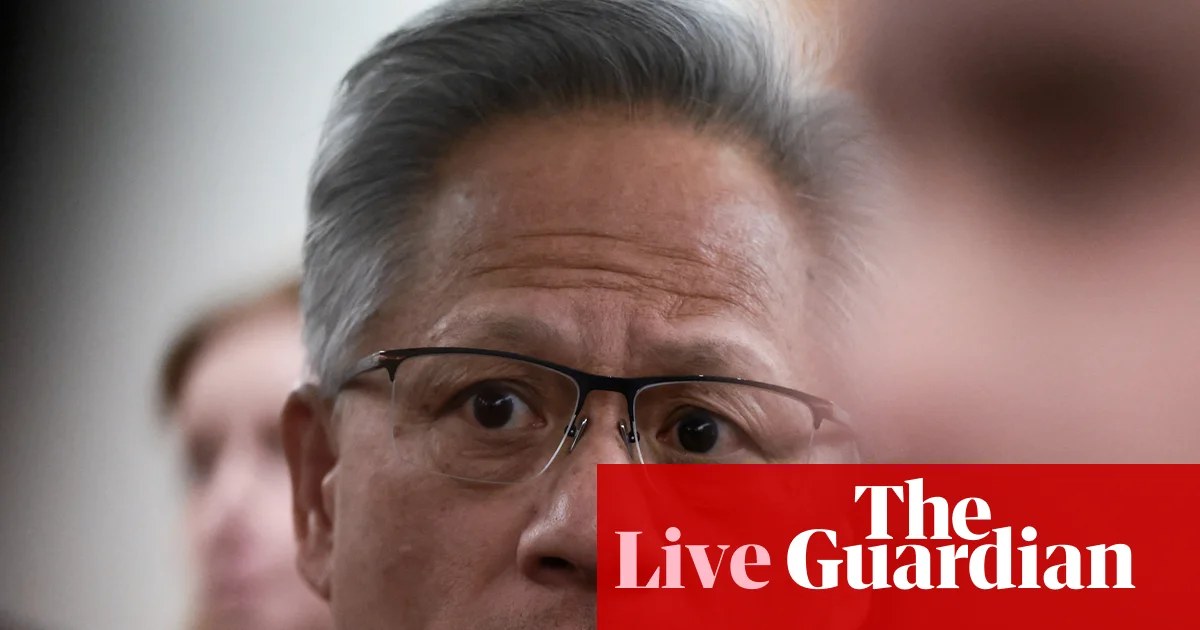
Nvidia's board has retained former acting U.S. Attorney Joon H. Kim and law firm Wachtell, Lipton, Rosen & Katz to investigate CEO Jensen Huang's relationship with a suspected Chinese spy, while the House China committee chair set a Wednesday deadline for Huang to agree to a closed-door briefing or face subpoena. The scandal has wiped roughly $430 billion off Nvidia's market value since Friday.
Key Takeaways
- Nvidia board hired former SDNY acting U.S. Attorney Joon H. Kim and Wachtell Lipton for independent investigation into CEO Jensen Huang's alleged affair with suspected Chinese spy
- Approximately $430 billion in market capitalization erased since Friday; shares down 4.27% Monday, 5.5% Tuesday, rebounded 3.8% Wednesday to $175.34
- House China Committee Chair John Moolenaar set Wednesday end-of-day deadline for Huang to agree to closed-door briefing or face subpoena
- U.S. envoy to China characterizes relations as 'bumpy' after affair; Beijing denies espionage allegations
- FTSE 100 closed up 0.8% at 10,835 amid separate U.K. budget leak controversy involving Chancellor John Healey
Executive Intelligence Brief
Board Retains Heavyweight Counsel for Independent Probe
The appointment of Joon H. Kim, former acting U.S. Attorney for the Southern District of New York, and Wachtell, Lipton, Rosen & Katz signals the gravity with which Nvidia's board is treating the allegations. Wachtell Lipton, known for high-stakes corporate governance matters including its 2022 representation of Twitter in the Elon Musk acquisition fight, will conduct what the company described as "a thorough and independent investigation" into the circumstances surrounding Huang's affair.
The probe centers on Huang's relationship with a woman identified as Alice Huang, whom U.S. officials believe is a Chinese intelligence operative. She reportedly worked for Megaspeed, a Nvidia customer. Beijing has denied allegations of an espionage operation targeting Jensen Huang.
Market Capitalization Erasure and Partial Rebound
The financial impact has been severe. Nvidia's market capitalization fell from $4.50 trillion before the story broke last weekend to $4.07 trillion by Tuesday, a decline of approximately $430 billion. Shares dropped 4.27% on Monday and a further 5.5% on Tuesday. In Wednesday morning trading, shares recovered 3.8% to $175.34, narrowing but not reversing the losses.
The volatility underscores investor sensitivity to governance risk at the world's most valuable company, which serves as the primary infrastructure provider for the global AI boom. Any disruption to Nvidia's leadership or operations would cascade through the technology supply chain.
Congressional Escalation Adds Regulatory Pressure
Republican Representative John Moolenaar, chair of the House Select Committee on the Chinese Communist Party, escalated the political stakes Wednesday. Moolenaar told Fox Business that Huang has until end of day Wednesday to respond to an earlier request for a closed-door briefing. If Huang declines or fails to propose an alternative date, Moolenaar said subpoenas are likely.
This congressional scrutiny transforms a corporate governance issue into a matter of national security oversight, given Nvidia's central role in advanced semiconductor technology subject to U.S. export controls on China.
Diplomatic Fallout and Broader Market Context
The U.S. envoy to China described bilateral relations as "bumpy" following the affair, highlighting the geopolitical dimension. Meanwhile, U.K. markets provided a counterpoint: the FTSE 100 closed up 0.8% at 10,835, nearing record highs, led by gains in Computacenter (+4.7%) and Polar Capital (+4%). U.K. Chancellor John Healey separately appeared before the Treasury committee regarding a budget-related bank tax leak, expressing dismay at the disclosure.
Forward Outlook: Investigation Timeline and Compliance Deadlines
Three critical workstreams now converge. First, the Wachtell Lipton investigation proceeds without a public timeline; its findings will determine whether Huang retains board confidence. Second, the Wednesday congressional deadline forces an imminent decision on cooperation or confrontation with the House China committee. Third, the diplomatic channel between Washington and Beijing must absorb another friction point in the technology competition. Markets will monitor Nvidia's share price for signals on whether the 3.8% rebound reflects genuine confidence or technical short-covering.