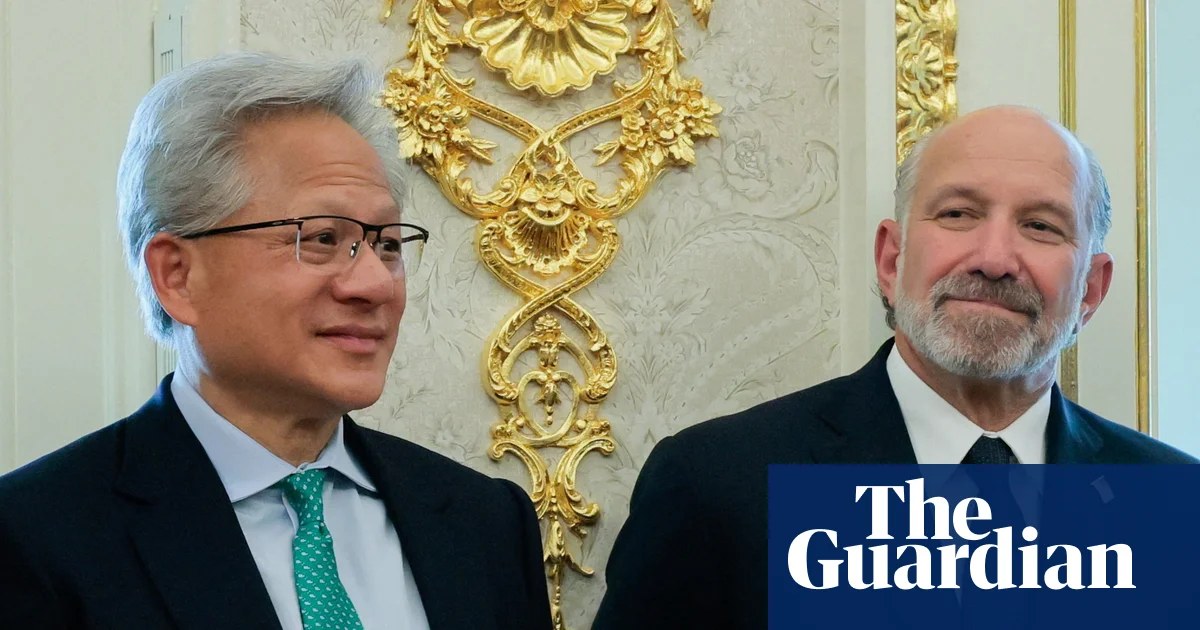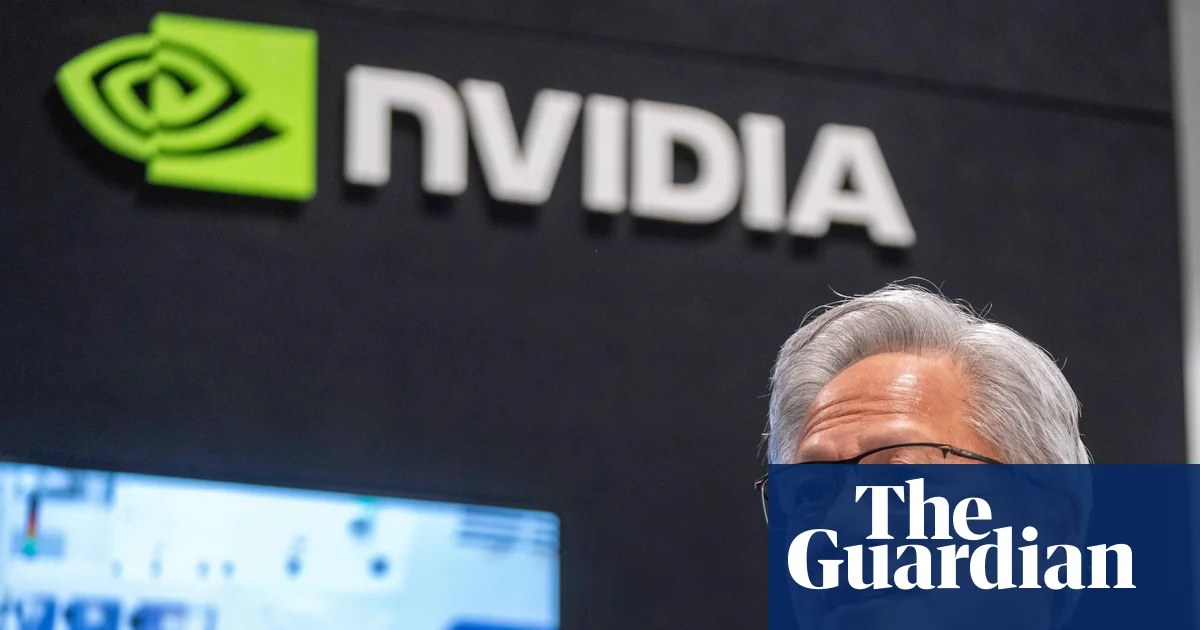
Nvidia and CEO Jensen Huang were hit with a federal shareholder class-action lawsuit in California on Monday alleging they concealed Huang's affair with a former Megaspeed executive identified by US authorities as a Chinese intelligence asset, exposing the $4.3tn chipmaker to national security risks. The suit was filed minutes after the market close, hours after President Trump confirmed the FBI is investigating Huang's links to the woman, Alice Huang. Shares fell 4.3%, wiping out approximately $190bn in market value.
Key Takeaways
- Federal class-action lawsuit filed in California alleges Nvidia and Jensen Huang concealed affair with Alice Huang, identified by US authorities as Chinese intelligence asset, creating material national security risk.
- President Trump confirmed FBI investigation into Huang's links; Huang admits infidelity but says he had 'absolutely no idea' the person was a spy.
- Nvidia shares fell 4.3% ($190bn market cap loss) Monday; lawsuit filed minutes after market close.
- Megaspeed connection raises export control compliance questions: firm reportedly investigated for potential diversion of Nvidia chips to China.
- Nvidia board launched independent investigation; key-person risk and succession planning now acute for $4.3tn company.
Executive Intelligence Brief
Lawsuit Alleges Material Omissions on National Security Risk
The complaint, filed in US District Court in California by retail investor Mark Kistenmacher, asserts that Nvidia and Huang misled shareholders by failing to disclose that the CEO's personal relationship with Alice Huang raised national security concerns threatening the company's reputation and business prospects. The suit specifically targets a statement Nvidia provided to the New York Times last month describing Huang's interactions with Alice Huang as 'not unusual or unexpected,' noting that 'meetings with customers are part of a CEO's job.' The lawsuit claims this statement was 'materially false and misleading at the time it was made because Jensen Huang had an affair with Alice Huang.'
The complaint also alleges false and misleading statements regarding Nvidia's relationship with Megaspeed, the Singapore-based firm where Alice Huang was an executive. Megaspeed has reportedly been investigated over suspicions it may have diverted Nvidia chips to China in contravention of US export restrictions.
FBI Investigation and Presidential Confirmation
President Trump told reporters at a White House briefing on Monday that the FBI is investigating Huang's affair 'in terms of something else,' adding he believed Huang would be 'in good shape.' Trump said he spoke to Huang on Sunday: 'He said he had absolutely no idea that the person in question was a spy.' The New York Times reported in October that US authorities had concluded Alice Huang was a Chinese intelligence asset. Huang admitted in a Sunday interview that he had been 'unfaithful' to his wife, without identifying the other party.
Export Control Exposure and Megaspeed Link
The allegations intersect directly with the most sensitive geopolitical constraint on Nvidia's business: US export controls on advanced AI semiconductors to China. In an October 30 interview, Huang stated: 'we've studied all their [Megaspeed] deployments of our GPUs and counted every one. And I think the US government also has as well.' Megaspeed said last year it has acted 'fully in compliance with all applicable laws, including US export control regulations.' Any finding that Nvidia technology reached Chinese intelligence via Megaspeed could trigger severe regulatory penalties and further restrict Nvidia's China market access.
Board Investigation and Governance Vacuum
Nvidia announced Sunday it was conducting an independent investigation into reports that Huang was the 'target of a foreign intelligence effort.' The board faces immediate pressure to address key-person risk; Huang co-founded the company in 1993 and is the singular public face of the AI boom. Several US law firms have announced investigations into whether Nvidia misled investors. The class action was filed five minutes after Monday's market close, a standard procedural move to capture the day's price drop as the loss causation benchmark.
Forward Outlook: Investigations, Litigation, and Succession
Four parallel tracks now threaten Nvidia's stability: the FBI investigation confirmed by the President; the board's independent probe; the federal securities class action seeking unspecified damages; and potential SEC enforcement over disclosure failures. Huang pledged in an open letter to 'support the investigation and cooperate fully,' affirming commitment to 'protecting Nvidia and supporting America's national security.' With the company's market capitalization down $190bn in a single session, the board's handling of succession planning — should Huang be sidelined — has become an urgent fiduciary question.