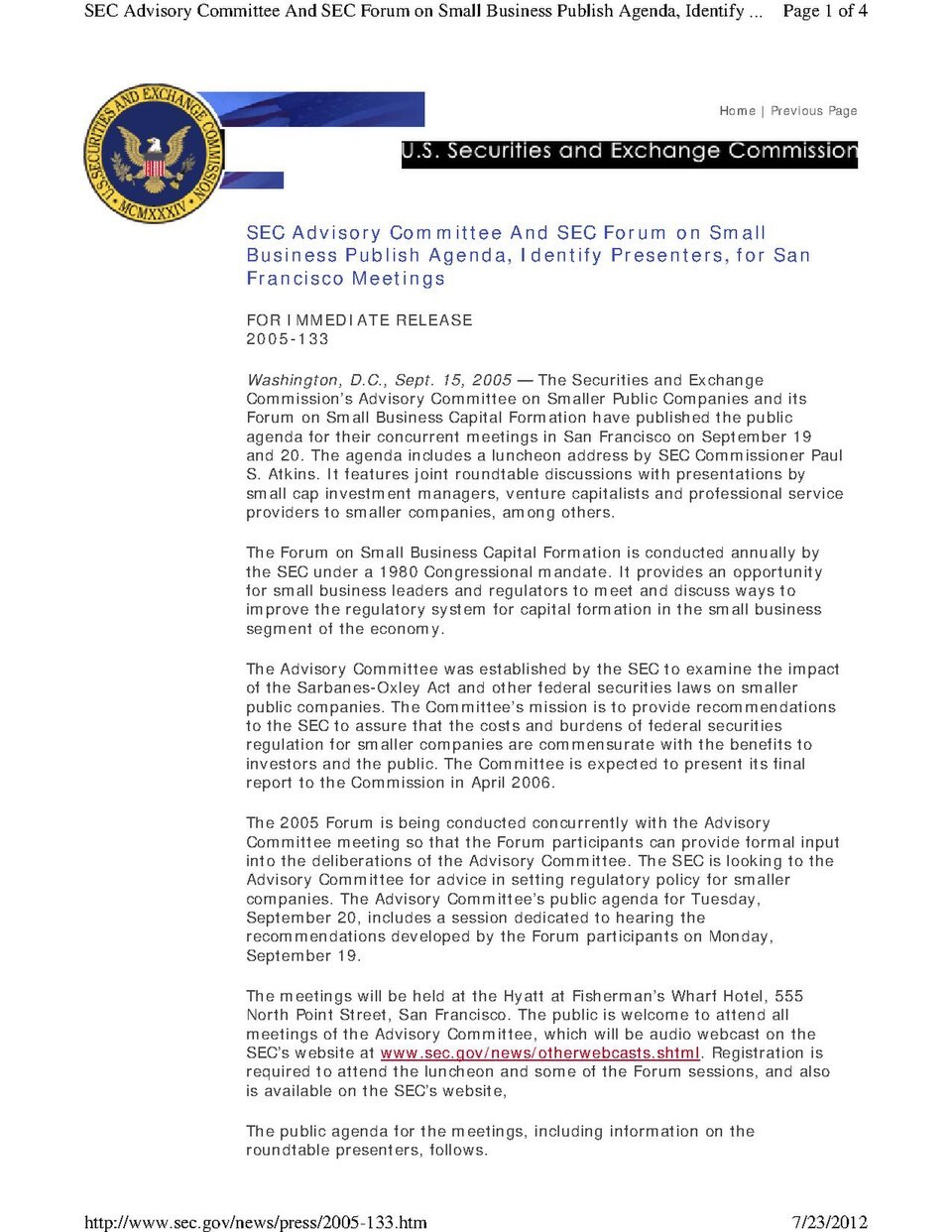
The SEC's Small Business Capital Formation Advisory Committee will convene on October 27 to examine structural reforms to the IPO process and potential changes to Regulation Crowdfunding, aiming to revive public listings and expand early-stage capital access.
Key Takeaways
- SEC Small Business Advisory Committee meets Oct. 27, 2026 at 10 a.m. ET to discuss IPO modernization and Reg CF reforms.
- Morning session targets IPO process, communication rules, and analyst support; afternoon focuses on Reg CF framework and policy changes.
- Meeting open to public at SEC HQ (100 F St NE, DC) and streamed live on SEC.gov.
- Committee hears from crowdfunding professionals; potential recommendations could influence future SEC rulemaking.
- No specific rule proposals announced; outcomes remain advisory pending Commission action.
Executive Intelligence Brief
Agenda Focus: IPO Modernization and Reg CF Reform
The morning session will tackle IPO modernization, building on ideas from prior meetings. Committee members will evaluate ways to encourage more companies to go public, focusing on modernizing the offering process, revising IPO communication rules, and addressing analyst coverage and support gaps that often deter smaller issuers.
The afternoon session shifts to Regulation Crowdfunding (Reg CF). The committee will assess the current regulatory framework, review successes and challenges to date, and debate potential policy changes to improve the exemption and further expand access to early-stage capital raising. To inform the discussion, members will hear from several experienced professionals in the crowdfunding space.
Context: Addressing the Listing Gap and Capital Access
The meeting reflects ongoing SEC concern over the decades-long decline in U.S. public company listings and the persistent funding gap for early-stage ventures. While Reg CF, adopted in 2015 and expanded in 2021, has opened retail access to private markets, uptake remains modest relative to other exemptions. Simultaneously, the traditional IPO on-ramp is widely viewed as costly and complex for smaller firms, contributing to a 'listing gap' where companies stay private longer or seek foreign venues.
Market Transmission and Stakeholder Impact
Any resulting recommendations could reshape capital formation pathways for emerging growth companies, venture-backed startups, and Main Street businesses. Broker-dealers, funding portals, and exchanges would face operational adjustments if communication rules or offering processes change. Investors gain potential access to a broader universe of early-stage opportunities, though with attendant risk considerations. The committee's advisory role means formal rulemaking would require separate Commission action, public comment, and economic analysis.
Forward Outlook: Next Steps and Monitoring Points
The meeting is open to the public at the SEC's headquarters at 100 F Street NE, Washington D.C., and will be streamed live on SEC.gov. Market participants should monitor the session for specific reform proposals, the tenor of professional testimony on Reg CF, and any signals on whether the committee will issue formal recommendations to the Commission. Subsequent SEC rulemaking timelines remain uncertain and would follow standard Administrative Procedure Act processes.